


Garage Door Spring Replacement in Australia: What You Need to Know
Apr 07, 2026
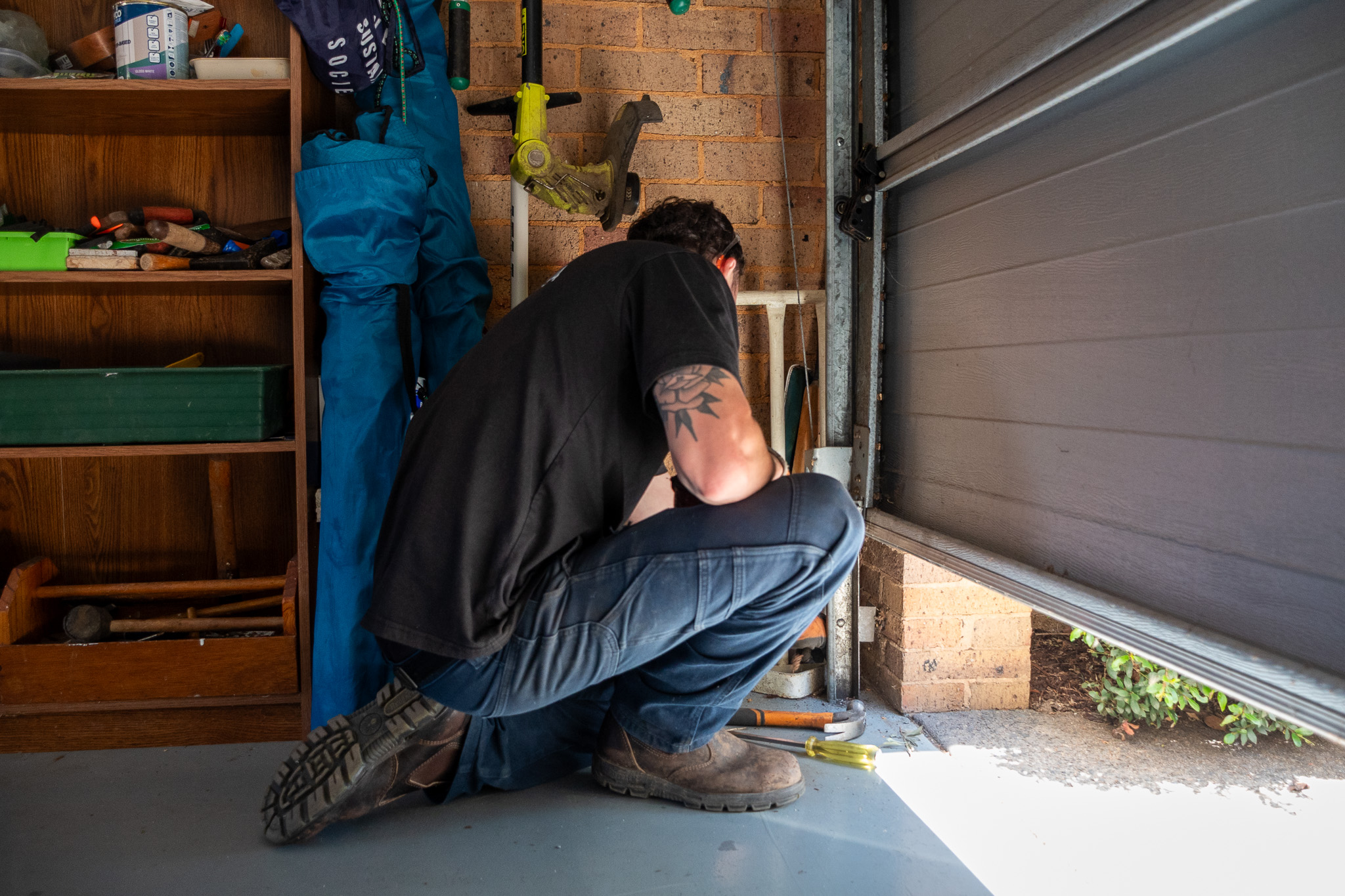
A broken garage door spring is the most common repair call across Melbourne, Sydney, Brisbane and the Gold Coast. The good news is it's a well-understood job, and understanding what's involved helps you act quickly, safely, and confidently when it happens to you.
What Does a Garage Door Spring Actually Do?
Your garage door spring does the heavy lifting, literally. A standard Colorbond garage door can weigh up to 100 kg, and it's the spring, not the motor, that counterbalances that weight each time the door opens and closes. The motor simply guides the movement. When a spring fails, the opener has to work far harder than it was designed to, which can burn out the motor and turn a simple fix into a much larger repair.Torsion Springs vs Extension Springs: Which Do You Have?
There are two main spring types used in Australian homes. Identifying yours takes about ten seconds.Torsion Springs - sectional/panel-lift doors
Mounted horizontally on a metal bar directly above the door. These are the most common type in modern Australian homes and are found on sectional (panel-lift) doors. Torsion springs are durable, safer to work with, and recommended for heavier doors.Extension Springs - tilt doors & older roller doors
Run vertically along each side of the door, near the bottom. Common on older tilt doors. Extension springs are always sold and replaced as a matched pair, if one fails, both must be replaced to keep the door balanced. If you can't see any springs at all, you likely have a roller door, the spring is coiled inside the drum at the top.How Long Do Garage Door Springs Last?
Spring lifespan is measured in cycles, one open and one close equals one cycle. Standard torsion springs are rated for around 10,000 cycles, which typically translates to 7–12 years for an average Australian household. High-cycle springs rated for 50,000 cycles or more can last 15–20 years. Factors that shorten spring life in Australia include:- Salt air and coastal humidity, accelerates rust on spring coils (particularly relevant for Gold Coast and coastal Sydney)
- Melbourne's temperature extremes, repeated metal expansion and contraction increases fatigue over time
- Infrequent lubrication, springs without regular silicone spray develop friction and wear faster
- Skipping annual servicing, tension loss that could be corrected early goes undetected until failure
Warning Signs Your Spring Is About to Fail
Catching these signs early prevents the door from failing completely, and stops a failed spring from burning out your motor.- A loud bang from the garage, the sound of a torsion spring snapping under tension. Stop using the door immediately.
- The door feels extremely heavy when lifted manually, the spring is no longer counterbalancing the door's weight.
- A visible gap in the coil above the door, a broken torsion spring will show a clear separation.
- The door hangs crooked or tilts to one side during operation.
- Cables appear loose or slack on one side of the door.
- Increasing squeaking or grinding during operation, often caused by rust or lack of lubrication.
Can You Replace a Garage Door Spring Yourself?
No, and this is one of the few home repairs where that answer is unambiguous. Garage door springs are under extreme stored tension. A torsion spring that snaps during a DIY attempt can cause serious injury. Garage door spring replacement is classified as skilled work in Australia, and every manufacturer and insurer in the country recommends using a licensed technician. Attempting it yourself may also void your home insurance.How to Make Your Springs Last Longer
A well-maintained garage door can last 20–25 years rather than the 10–15 typical of a neglected system. Here's what you can do safely yourself:- Lubricate rollers, hinges and tracks every six months with a silicone-based spray. Avoid WD-40, it attracts dust and can damage nylon rollers.
- Spray springs annually with silicone lubricant to reduce rust and friction.
- Tighten loose hardware, bolts and brackets work loose over thousands of cycles.
- Do the balance test annually: disconnect the opener, lift the door to waist height, and let go. It should hold its position. If it rises or falls, call a technician, do not adjust spring tension yourself.
- Book a professional service every 12 months. A technician will check spring tension, inspect cables, test auto-reverse sensors, and catch problems before they become failures.